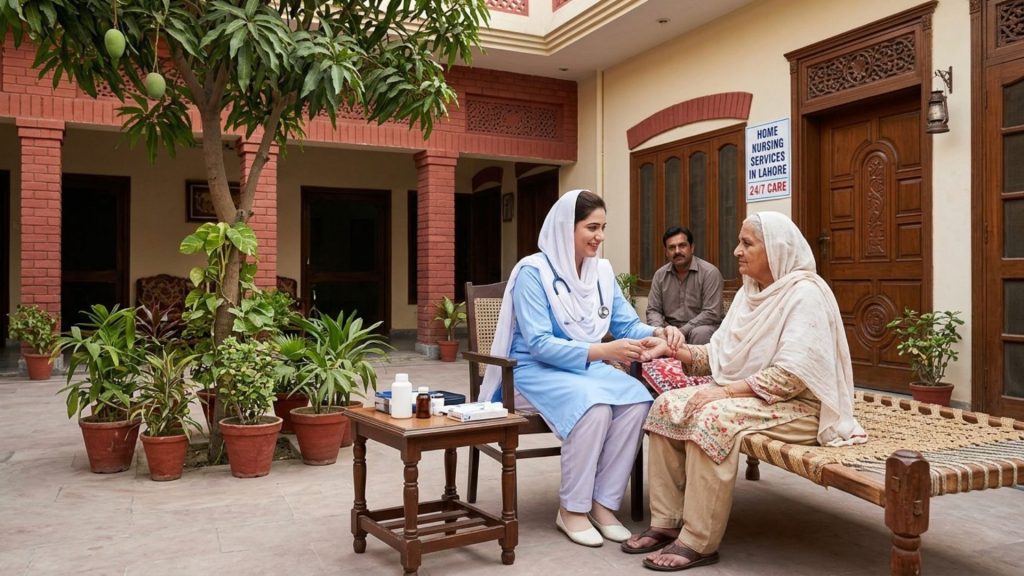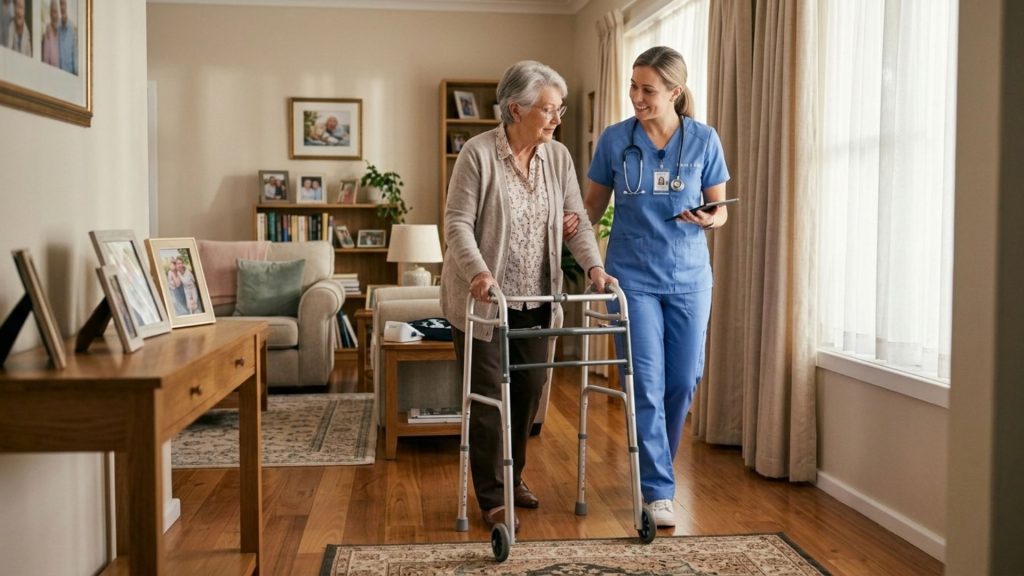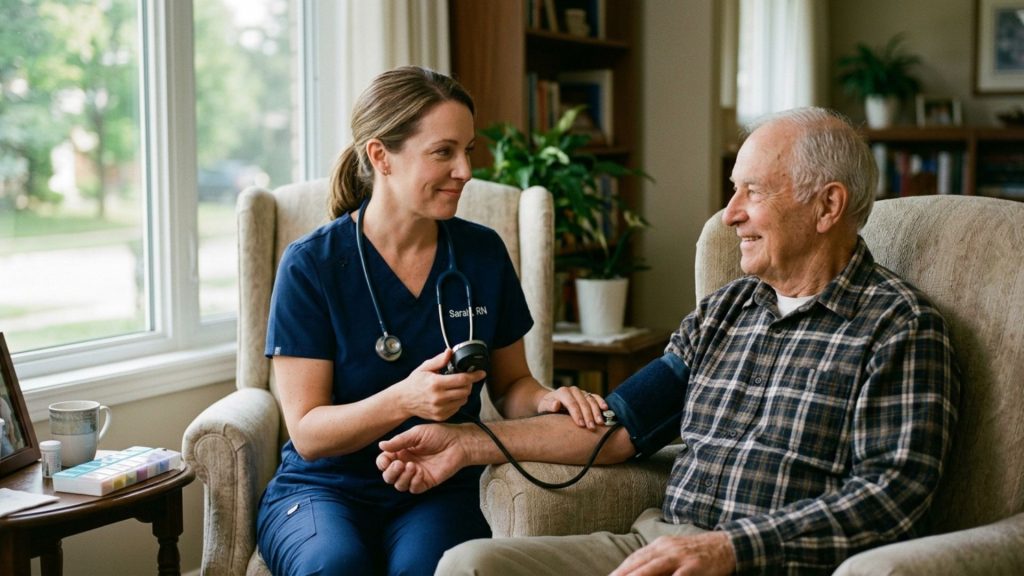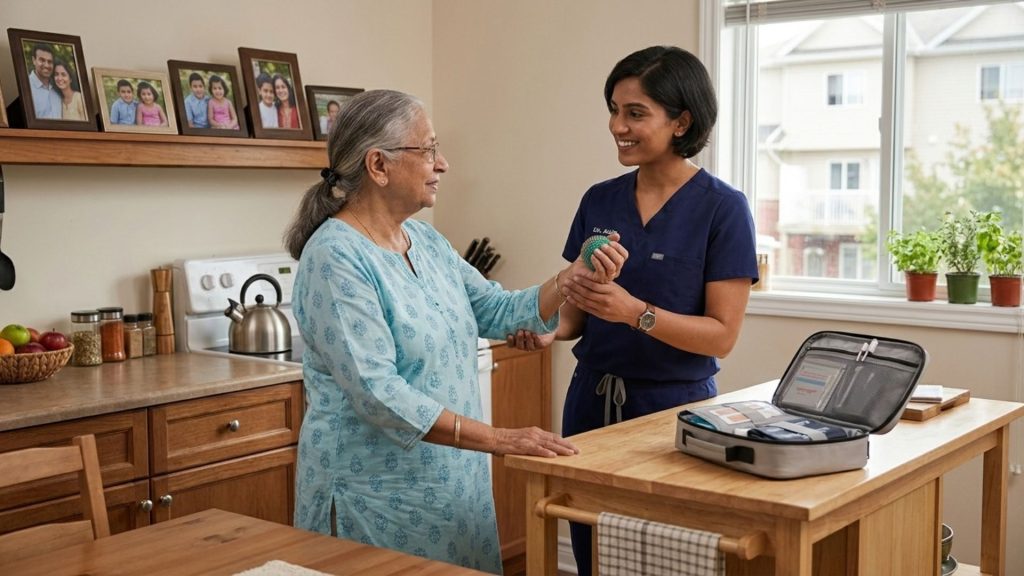
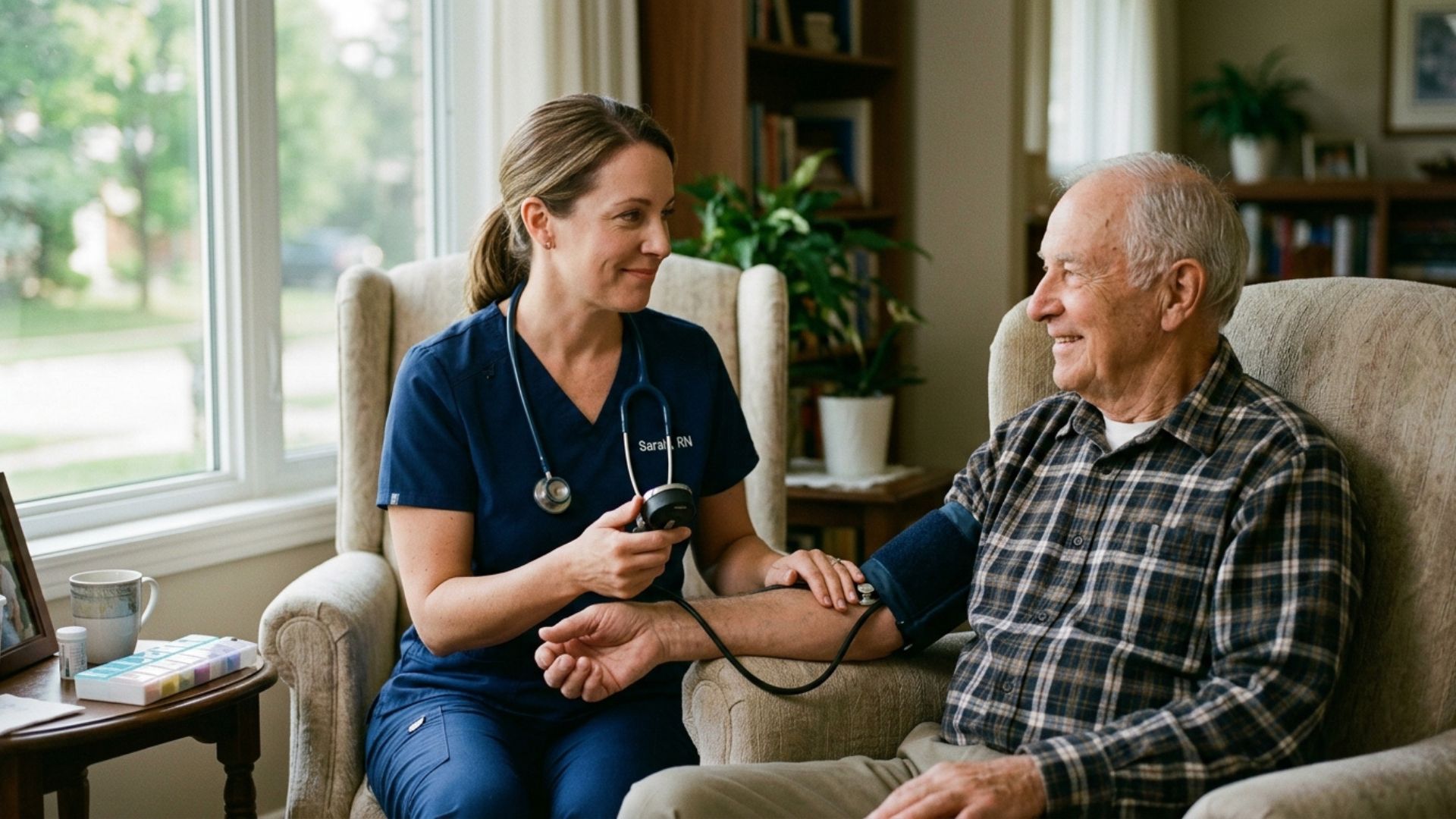
Good healthcare doesn’t always have to happen inside a hospital. Nursing services bring professional medical support directly to your home. This can make recovery easier, especially when you need regular monitoring or skilled care. A trained nurse can help manage medications, wounds, injections, vital signs, and other prescribed needs.
Home nursing can also support older adults and patients with long-term health conditions. More importantly, it gives families practical help when daily care becomes difficult. You can receive care in familiar surroundings while staying connected with your family. With the right provider, professional nursing care can make home recovery safer, more organized, and more comfortable.
Read More: https://lahorehomemedicalcare.com/home-nurse-charges-in-lahore/
What Are Nursing Services?
Nursing services are professional healthcare services provided by qualified nurses to patients who need medical support. Depending on the patient’s condition, care may happen at home for a short period or continue for several weeks or months. Nurses can monitor vital signs, provide wound care, assist with prescribed treatments, support medication routines, and observe changes in a patient’s condition.
Home nursing is different from ordinary caregiving. A family caregiver may help with meals, bathing, transportation, or companionship. A professional nurse has clinical training and can perform nursing tasks within their professional scope. The exact services depend on the nurse’s qualifications, the patient’s needs, and the treating doctor’s instructions.
Nursing Care vs. General Caregiving
| Feature | Professional Nursing | General Caregiving |
|---|---|---|
| Clinical assessment | Yes, within nursing scope | Usually limited |
| Vital-sign monitoring | Can be provided | Basic support may vary |
| Wound care | Trained nurses can provide appropriate care | Usually not a clinical task |
| Medication support | Can follow prescribed instructions | May provide reminders |
| Medical procedures | Depends on training and orders | Generally not provided |
| Communication with healthcare team | Common part of care | Usually family-led |
Who Needs Nursing Services at Home?
Many different patients can benefit from nursing services at home. The need isn’t limited to older adults. Someone recovering from surgery may need temporary nursing support. A patient with diabetes may need regular monitoring. Another person may require wound care after leaving the hospital. In each case, the care plan should match the patient’s actual medical needs.
Home nursing can also help families manage complex care routines. This becomes especially valuable when a patient has limited mobility or needs frequent clinical attention. However, home care isn’t suitable for every situation. Severe breathing problems, major bleeding, loss of consciousness, and other emergencies require urgent medical evaluation.
| Patient Type | Possible Nursing Need |
|---|---|
| Elderly patients | Monitoring, medication support, mobility-related care |
| Post-surgery patients | Wound care, monitoring, recovery support |
| Diabetes patients | Glucose monitoring and prescribed care |
| Stroke patients | Positioning, skin care, monitoring, recovery support |
| Chronically ill patients | Ongoing assessment and treatment support |
| Patients after hospitalization | Follow-up care and health monitoring |
Types of Nursing Services at Home
The range of home nursing services depends on the patient’s condition and care plan. Some patients need a single visit for wound dressing. Others require regular nursing shifts because their condition needs closer observation. A qualified provider should explain exactly what the nurse can provide before care begins.
Common services include checking blood pressure, temperature, pulse, blood glucose, and oxygen saturation. Nurses may also provide prescribed injections or assist with medication routines within their professional scope. Wound dressing, catheter care, drain management, and post-hospital monitoring may also form part of a care plan. Specialized treatments require appropriate clinical training, equipment, and medical instructions.
Common Home Nursing Services
| Nursing Service | Main Purpose |
|---|---|
| Vital-sign monitoring | Tracks important changes in health |
| Wound dressing | Supports proper wound management |
| Injection administration | Provides prescribed injectable treatment |
| Medication support | Helps follow the prescribed schedule |
| Catheter care | Supports safe catheter management |
| Post-surgical care | Helps monitor recovery after surgery |
| Chronic care | Supports ongoing health management |
Benefits of Professional Nursing Care at Home
The biggest advantage of professional nursing care at home is personalized support. Instead of following a general routine, the nurse can focus on the patient’s specific care plan. This may include monitoring symptoms, completing prescribed nursing tasks, and communicating relevant changes to the healthcare team. Family members also gain practical support during demanding periods.
Another benefit is convenience. Traveling to a healthcare facility for every routine need can be exhausting for someone recovering from illness. Home nursing can reduce that burden when the patient’s condition allows care at home. It also lets patients remain in familiar surroundings. That can make daily routines feel more manageable during recovery.
Nursing Services for Elderly Patients
Older adults may need nursing services because aging can come with several health and mobility challenges. Some seniors manage diabetes, high blood pressure, heart conditions, or other chronic illnesses. Others need help after hospitalization or surgery. Regular nursing visits can provide structured monitoring and help families notice changes that should be discussed with a healthcare professional.
Elderly care also requires attention beyond basic medical tasks. Nurses may support safe positioning, skin care, mobility routines, medication schedules, and general observation. Fall risks deserve particular attention. A small change in balance or strength can create a serious problem for an older person. Good home nursing therefore combines clinical care with careful observation.
Case Study: An older patient recovering after hospitalization may receive scheduled nursing visits for vital-sign checks, medication support, wound observation, and communication with family members. The exact plan should follow the patient’s medical instructions.
Nursing Care After Surgery
The first days after surgery can be challenging. Patients may feel weak, uncomfortable, or unsure about their recovery routine. Post-surgical nursing care can provide professional support during this transition. Depending on the procedure, a nurse may monitor vital signs, manage prescribed wound care, assist with medications, and observe the surgical site for concerning changes.
Recovery also requires careful attention to hygiene and mobility. Nurses can help patients follow their prescribed instructions while reducing avoidable mistakes. However, home nursing doesn’t replace the surgeon. Increasing pain, heavy bleeding, serious breathing difficulty, high fever, or other concerning symptoms may require prompt medical assessment.
What Post-Surgery Nursing May Include
Wound care: Proper dressing and observation according to medical instructions.
Medication support: Assistance with prescribed medicines and schedules.
Vital monitoring: Checking relevant measurements and reporting significant changes.
Mobility support: Helping the patient follow approved movement and positioning instructions.
Recovery observation: Watching for changes that may need medical attention.
Nursing Services for Chronic Conditions
Long-term illnesses often require consistent care rather than one-time treatment. Home nursing services can support patients who need regular monitoring and assistance with an established care plan. Diabetes is one example. A patient may need glucose monitoring, medication support, dietary guidance from the healthcare team, and observation for changes.
Stroke recovery can create another set of needs. Patients with weakness or paralysis may require help with positioning, skin protection, mobility exercises prescribed by professionals, and routine monitoring. Chronic respiratory conditions may also require structured observation. The nurse’s role depends on the patient’s diagnosis and prescribed plan.
Consistency matters here. A single measurement tells you less than a reliable pattern. Proper documentation can help the healthcare team understand whether the patient’s condition is changing over time.
What Does a Home Nurse Do During a Visit?
A typical nursing visit begins with an assessment. The nurse reviews the patient’s current condition and checks relevant information. This may include vital signs, symptoms, medication routines, or the condition of a wound. The nurse then provides the planned care according to the patient’s instructions and professional scope.
Documentation comes next. Important observations should be recorded clearly. If the nurse notices a significant change, that information may need to reach the doctor or another appropriate healthcare professional. Good communication is a key part of safe nursing services because small changes can sometimes become important clinical information.
Home Nursing Process
Patient assessment → Care plan review → Nursing care → Observation → Documentation → Appropriate communication → Follow-up
How to Choose the Right Nursing Service
Choosing a nursing provider requires more than checking the price. First, confirm that the nurse has suitable professional qualifications and experience. Then explain the patient’s condition clearly. A provider should tell you whether its nurses can handle the required care. This is especially important when the patient needs wound care, injections, catheter management, or other skilled services.
You should also understand the practical details before starting. Ask about visit duration, schedules, replacement arrangements, supplies, and communication procedures. Pricing should be transparent. If a provider cannot clearly explain what you’re paying for, ask for a detailed breakdown before making a decision.
| What to Check | Why It Matters |
|---|---|
| Nurse qualifications | Confirms appropriate professional training |
| Relevant experience | Helps match the nurse to patient needs |
| Services offered | Prevents misunderstandings about care |
| Visit schedule | Ensures consistent support |
| Emergency procedure | Clarifies what happens when problems arise |
| Replacement policy | Provides continuity if a nurse is unavailable |
| Total price | Helps avoid unexpected charges |
Cost of Nursing Services
The cost of nursing services varies considerably. There isn’t one fixed price that applies to every patient. A short nursing visit will usually involve different costs than overnight or round-the-clock care. Specialized procedures may also affect the final charge.
Location can matter as well. Providers in different cities may use different pricing models. The nurse’s experience, level of care, number of visits, shift length, and required equipment can all influence the total amount. Always ask whether medical supplies are included or charged separately.
| Pricing Model | Usually Suitable For | Cost Factors |
|---|---|---|
| Per visit | Occasional nursing needs | Visit length and service |
| Hourly | Several hours of support | Hours required |
| Daily | Regular daily care | Shift length and care level |
| Monthly | Long-term arrangements | Schedule and patient needs |
| Specialized care | Complex clinical needs | Skill level and procedures |
Nursing Services vs. Hospital Care
Home nursing and hospital care serve different purposes. Nursing services at home are generally designed for planned care, recovery support, monitoring, and other appropriate clinical needs. A hospital provides access to a much broader range of emergency services, diagnostic testing, specialists, and advanced medical equipment.
For example, a patient recovering from a routine procedure may receive wound care at home. However, sudden severe chest pain or major breathing difficulty requires urgent medical attention. The safest approach is to understand the limits of home care before starting services.
| Situation | Appropriate Setting |
|---|---|
| Routine wound care | Home nursing may be suitable |
| Prescribed injection | Home nursing may be suitable |
| Routine monitoring | Home nursing may be suitable |
| Serious breathing difficulty | Urgent medical evaluation |
| Severe bleeding | Emergency medical care |
| Loss of consciousness | Emergency medical care |
| Sudden major deterioration | Urgent medical evaluation |
When Home Nursing Isn’t Enough
Even with excellent professional nursing care, some situations require a higher level of medical treatment. Nurses can monitor patients and recognize concerning changes. They cannot replace emergency departments, hospitals, or specialist medical teams when advanced treatment becomes necessary.
Watch for serious symptoms such as sudden difficulty breathing, severe chest pain, heavy bleeding, fainting, sudden confusion, or a major decline in responsiveness. If these symptoms occur, follow the patient’s emergency plan and seek urgent medical help. Don’t wait for a routine nursing visit.
Questions to Ask Before Hiring a Home Nurse
Before arranging nursing services, ask practical questions about qualifications, experience, availability, and care procedures. You should know exactly what the nurse will do during each visit. Ask whether specific procedures require a doctor’s prescription or written instructions. This helps keep the care plan clear.
Also discuss scheduling and costs. Find out what happens if the assigned nurse becomes unavailable. Ask how changes in the patient’s condition are communicated. Clear answers can prevent confusion later and help your family prepare for the patient’s ongoing needs.
FAQ’s
What are nursing services at home?
Nursing services are professional healthcare services delivered in a patient’s home. They can include monitoring, wound care, prescribed injections, medication support, catheter care, and post-hospital recovery support. The exact service depends on the patient’s condition and the nurse’s professional scope.
Who can benefit from home nursing services?
Patients recovering from surgery, older adults, people with chronic illnesses, and patients with mobility limitations may benefit from home nursing. The key factor is the need for professional nursing support rather than age alone.
Can a nurse provide wound care at home?
Yes. A suitably trained nurse can provide appropriate wound care according to the patient’s medical instructions. The nurse can also monitor the wound and report concerning changes to the appropriate healthcare professional.
How much do nursing services cost?
There is no single standard price. Nursing services cost depends on location, visit duration, type of care, nurse qualifications, schedule, and specialized procedures. Ask for a complete quotation before starting care.
Can home nursing replace hospital care?
No. Home nursing supports appropriate planned care outside the hospital. It doesn’t replace emergency treatment or advanced hospital services. Serious symptoms require prompt medical evaluation.
Conclusion
Nursing services can give patients skilled support without disrupting their home routine. They can help with monitoring, wound care, medication support, recovery, and chronic care. The right service depends on the patient’s condition and prescribed needs. Before hiring a provider, check qualifications, experience, services, scheduling, and total costs. Clear communication also matters. Remember that home nursing isn’t a substitute for emergency treatment. When a serious problem develops, seek urgent medical attention. With qualified professionals and a clear care plan, nursing services can make home-based healthcare safer, more organized, and more comfortable for patients and families.