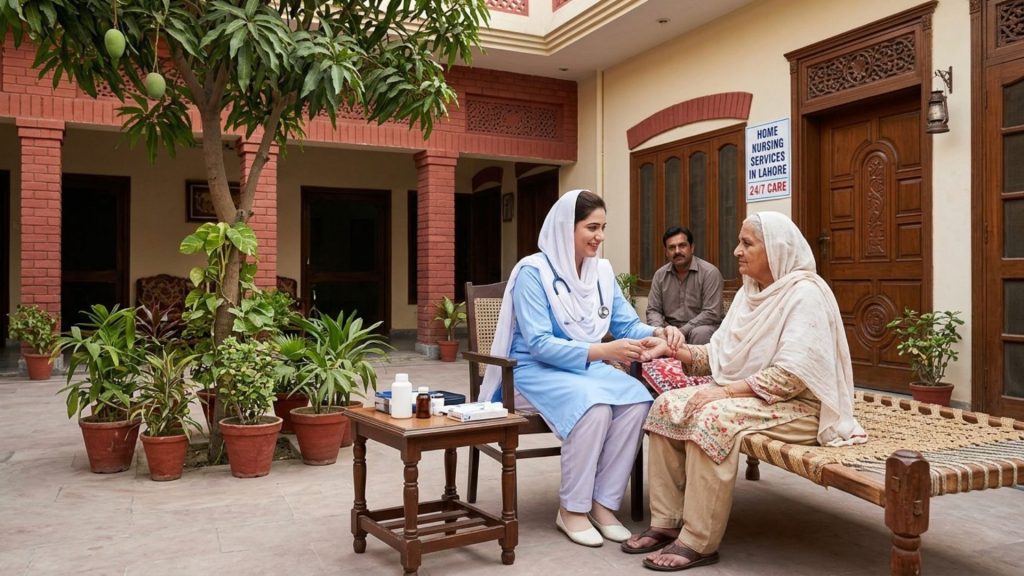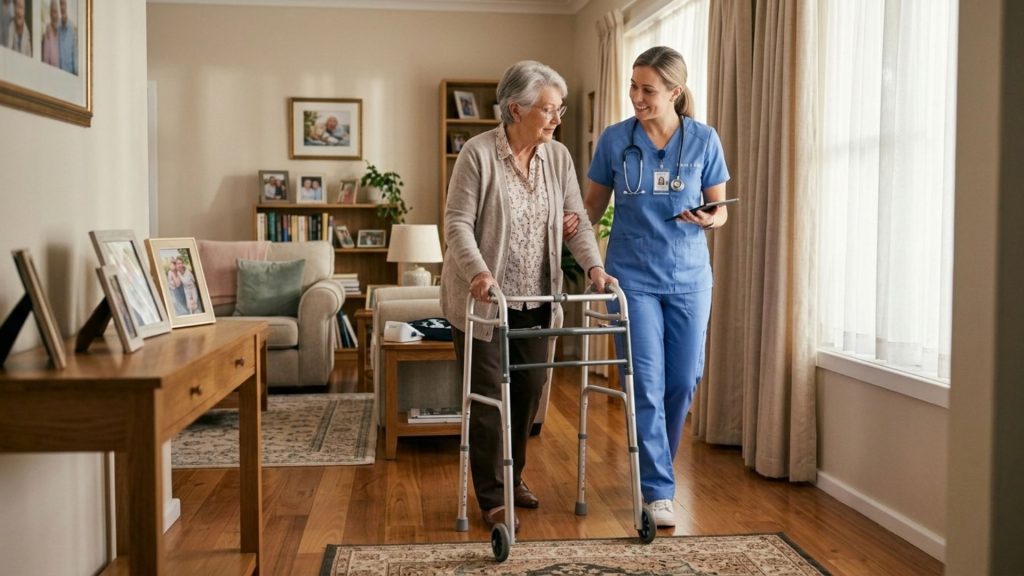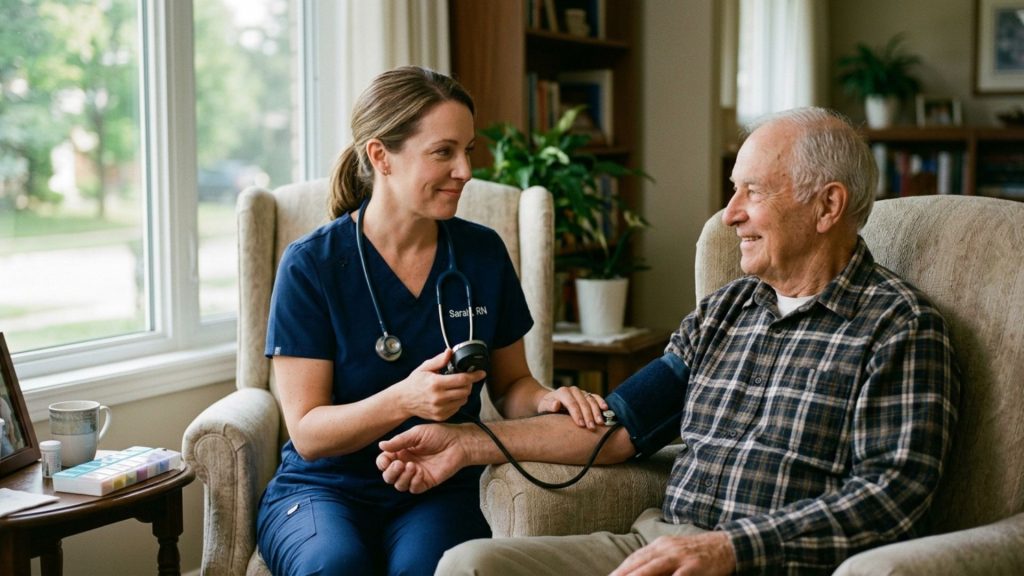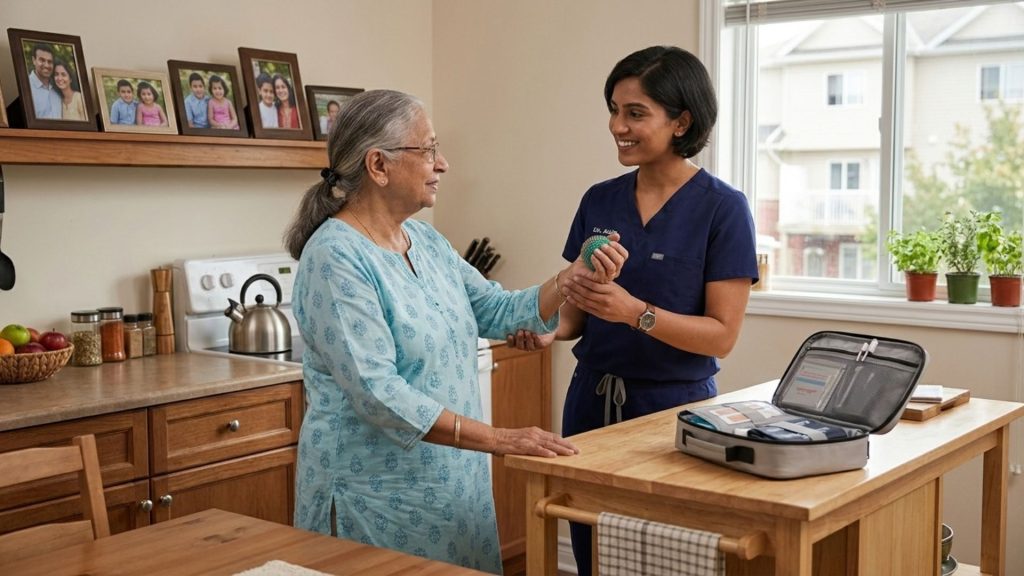
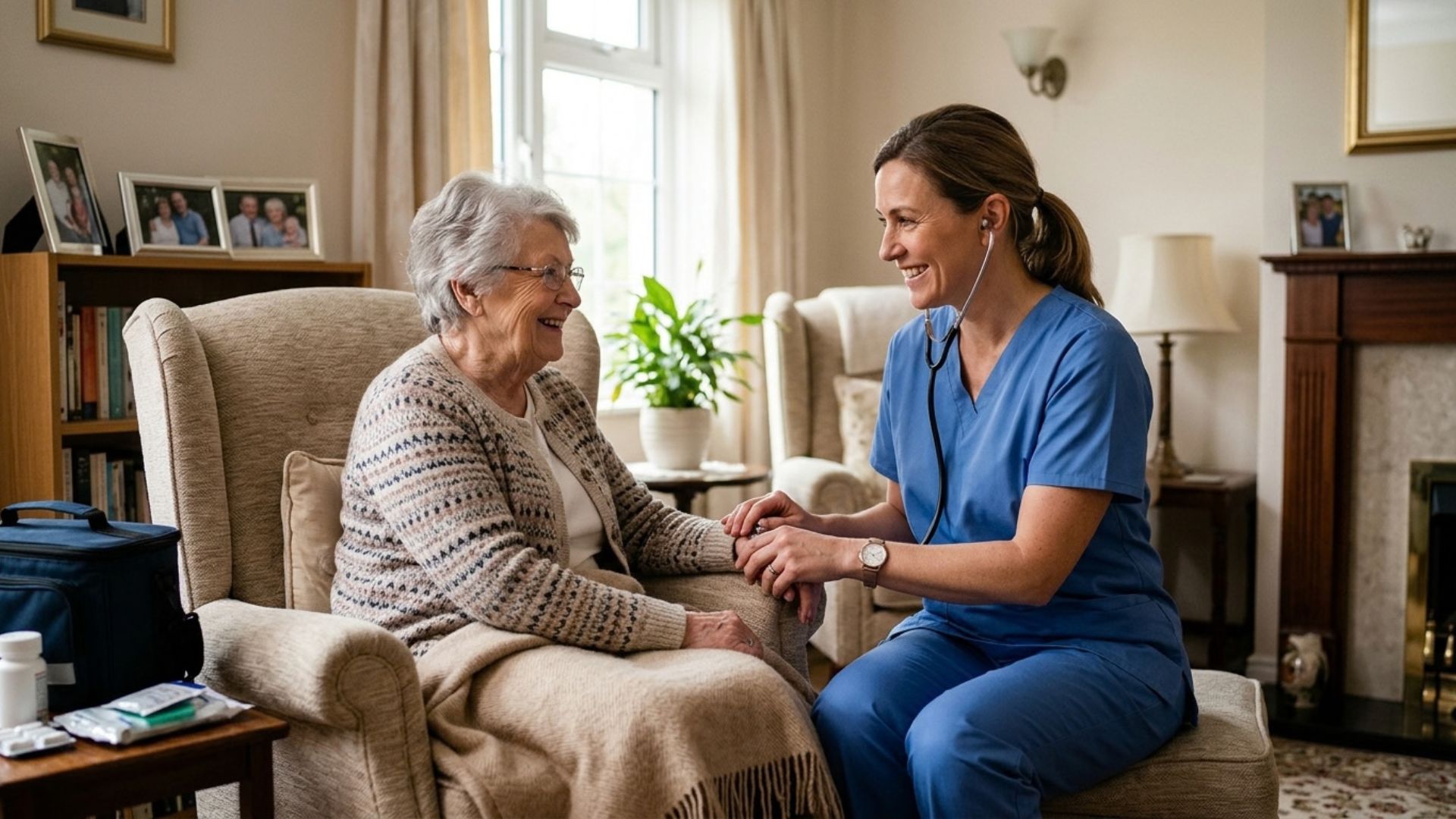
When illness, injury, surgery, or age makes daily life harder, home health care services can bring professional support directly to your home. Instead of traveling to a facility for every need, you may receive appropriate nursing, therapy, rehabilitation, and personal care where you live.
Home health care services can support recovery while helping you stay close to family and familiar surroundings. The right care also gives family members guidance when responsibilities become difficult to manage alone. From wound care to physical therapy, these services can be tailored to a patient’s condition, goals, and care plan.
Read More: https://lahorehomemedicalcare.com/home-medical-care-cost-in-pakistan/
1. What Are Home Health Care Services?
Home health care services are health-related services provided in a person’s home. They can support patients recovering from illness or injury. They can also help people manage ongoing health needs. Depending on the patient’s condition, care may involve skilled nursing, physical therapy, occupational therapy, speech therapy, medical social services, or certain personal-care assistance.
The important point is that professional home care isn’t simply household help. Skilled care involves trained professionals who assess the patient’s needs and follow an appropriate care plan. For example, a nurse may monitor a wound, administer prescribed treatment, or teach a family caregiver how to manage care safely. Medicare describes covered home health care as including skilled nursing and several therapy services when eligibility and medical-necessity requirements are met.
What Do Home Health Care Services Include?
The exact services depend on the patient’s medical condition and care plan. Home health care services may include nursing visits, rehabilitation, wound management, medication support, and patient education. Some providers also offer assistance with bathing, dressing, mobility, and other personal-care needs.
Skilled Nursing Care at Home
A home health nurse can monitor vital signs, assess symptoms, provide prescribed treatments, change dressings, and educate patients or caregivers. Skilled nursing may also involve certain injections, IV medications, tube-feeding support, or disease-management education when clinically appropriate.
Physical and Occupational Therapy
Physical therapy can help patients regain strength, balance, mobility, and functional movement. Occupational therapy focuses more on everyday activities and independence. These therapies can be particularly useful after surgery, injury, stroke, or other conditions that affect movement.
Speech and Language Therapy
Speech-language therapy can support patients who have communication or swallowing difficulties. These problems may occur after neurological conditions, strokes, injuries, or certain medical treatments. A qualified therapist can create exercises based on the patient’s specific limitations.
Personal Care Support
Some home care programs also provide assistance with bathing, dressing, toileting, and other daily activities. However, personal care isn’t automatically the same as skilled medical care. The exact services available depend on the provider, patient’s needs, and applicable coverage rules.
Who Needs Home Health Care Services?
Home health care services can benefit many patients who need professional support without remaining in a hospital or facility. Seniors may need help after hospitalization. Someone recovering from surgery may require wound monitoring and rehabilitation. A person with limited mobility may need therapy and assistance with safe movement.
Patients with chronic conditions can also benefit when their care plan requires ongoing monitoring or education. Diabetes, neurological conditions, heart problems, respiratory illnesses, and mobility limitations can create complex care needs. However, home care should always match the patient’s actual condition. A person requiring continuous medical monitoring may need a higher level of care than intermittent home visits can provide.
Nursing Care at Home
Nursing care is one of the most important parts of professional home health care services. A trained nurse can provide clinical care while also teaching patients and families what to do between visits. That education can make a major difference because many patients continue treatment long after the nurse leaves.
For example, consider someone recovering from surgery with a healing incision. The nurse may inspect the wound, change the dressing according to instructions, monitor symptoms, and explain what changes should be reported. The nurse can also communicate relevant concerns to the treating healthcare team. Official Medicare guidance describes home health nurses as professionals who provide direct care while managing, observing, evaluating, and teaching patients and caregivers.
Home Health Care Services for Seniors
Older adults often need care that balances medical support with independence. A senior may be recovering from an illness while also managing medications, reduced mobility, or several chronic conditions. Receiving appropriate care at home can make daily routines easier while keeping the family involved.
Still, senior care isn’t one-size-fits-all. Some people need occasional skilled visits. Others need extensive assistance with daily activities. A patient requiring round-the-clock supervision may need a different arrangement, such as residential nursing care. Nursing homes generally provide continuous or long-term care for people who need more extensive support.
Post-Surgery and Recovery Care at Home
The period immediately after surgery can feel overwhelming. The patient may have medication schedules, activity restrictions, wound-care instructions, and follow-up appointments to manage. Professional home health care services can help organize these responsibilities around the prescribed recovery plan.
Wound care is especially important. A trained professional can follow the ordered dressing routine and watch for concerning changes. Rehabilitation can also begin at home when clinically appropriate. Physical or occupational therapy may help restore movement and daily function. The exact treatment depends on the surgery, patient’s condition, and healthcare provider’s instructions.
A Practical Recovery Example
Imagine a patient returning home after a major orthopedic procedure. Walking may initially be difficult. The patient may also need help understanding exercises and safely moving around the house. A home health professional can support the prescribed rehabilitation plan while helping the family understand safe mobility practices.
That doesn’t mean home care replaces the surgeon or hospital. Instead, it creates a bridge between formal medical treatment and everyday recovery.
Home Health Care for Chronic Conditions
Chronic conditions often require consistent routines rather than one-time treatment. Home health care services can help eligible patients follow their care plans while monitoring changes that deserve professional attention. The goal isn’t simply to visit the patient. Good care connects daily routines with the larger treatment plan.
For example, diabetes care may involve medication education, blood-glucose monitoring, nutrition guidance, and foot-care awareness. Stroke recovery may involve physical therapy, occupational therapy, and speech therapy. Patients with respiratory conditions may need support with prescribed treatments and symptom monitoring. Each service should remain within the professional’s scope and the patient’s medical plan.
Benefits of Professional Home Health Care
One major benefit of home health care services is convenience. The patient receives appropriate care in a familiar environment. That can make routines feel less disruptive. Family members may also find it easier to participate in care when professional guidance is available at home.
Another benefit is individualized attention. A home environment can reveal practical issues that may not be obvious during a short clinic visit. For instance, a therapist can see how a patient moves from the bedroom to the bathroom. A nurse can identify challenges with medication routines or wound management. Professional care can therefore address the patient’s real daily environment rather than focusing only on a clinical setting.
What Does a Home Health Care Plan Include?
A good care plan begins with an assessment. The professional considers the patient’s medical condition, functional ability, medications, mobility, treatment requirements, and home situation. The plan then identifies appropriate services and goals.
The plan may specify which professional provides care, what treatment is required, how often visits occur, and what progress should be monitored. It can also include caregiver education. Medicare explains that its covered home health services are provided under a plan of care established and regularly reviewed by the appropriate healthcare provider.
| Care Area | Typical Purpose | Professional Involved |
|---|---|---|
| Skilled nursing | Clinical monitoring and treatment | Registered or licensed nurse |
| Physical therapy | Strength and mobility | Physical therapist |
| Occupational therapy | Daily function and independence | Occupational therapist |
| Speech therapy | Communication and swallowing | Speech-language pathologist |
| Personal care | Daily living assistance | Home health aide or caregiver |
| Medical social services | Support and community resources | Medical social worker |
How to Choose a Professional Home Health Care Provider
Choosing a provider requires more than checking the advertised price. Start by confirming the qualifications of the professionals who will provide care. Ask whether nurses and therapists have the required credentials. You should also ask whether the provider has experience with the patient’s specific condition.
Next, examine how the agency manages care. Ask who completes the initial assessment. Find out how the care plan is created. Ask how changes in the patient’s condition are communicated. You should also understand what happens if an assigned caregiver becomes unavailable.
| Question to Ask | Why It Matters |
|---|---|
| Who provides the care? | Confirms staff qualifications |
| Is an assessment completed? | Helps match services to patient needs |
| What services are included? | Prevents confusion about the care package |
| How are emergencies handled? | Clarifies escalation procedures |
| How are family members updated? | Supports communication |
| What happens if staff are unavailable? | Helps ensure continuity |
| What is the total cost? | Reduces unexpected expenses |
A reputable provider should also explain its policies clearly. That includes scheduling, cancellations, replacement staff, documentation, communication, and payment. Clear answers are valuable because families shouldn’t have to guess how care will work after services begin.
How Much Do Home Health Care Services Cost?
The cost of home health care services varies widely. Several factors influence the final price. These include the type of care, number of visits, hours required, professional qualifications, patient complexity, location, equipment, supplies, and length of care.
Some providers charge by the hour. Others use per-visit or daily rates. Skilled nursing generally has a different pricing structure from basic personal-care assistance. Insurance coverage can also change the amount a family pays. For example, Medicare covers certain medically necessary home health services for eligible beneficiaries. Its current guidance states that covered home health services have $0 cost under the Medicare benefit while certain durable medical equipment can involve a 20% Medicare-approved amount after applicable requirements.
| Cost Factor | Why It Changes the Price |
|---|---|
| Type of care | Nursing and therapy require professional skills |
| Visit frequency | More visits increase total service costs |
| Care duration | Long-term arrangements cost more overall |
| Patient complexity | More complex needs may require specialized staff |
| Supplies | Dressings and medical supplies may add expenses |
| Equipment | Mobility or medical equipment can create additional costs |
| Location | Local provider rates can differ |
Because coverage varies by country, insurer, and plan, families should confirm the exact benefit before starting care. Medicare’s rules are specific to the U.S. and shouldn’t be treated as universal pricing guidance.
Home Health Care vs. Hospital and Nursing Home Care
These settings serve different purposes. A hospital is designed for acute medical treatment and serious conditions that need close monitoring. A skilled nursing facility provides facility-based skilled nursing and rehabilitation for eligible patients who require that level of care. Home care allows appropriate services to be delivered where the patient lives.
The right setting depends on medical needs, safety, supervision requirements, and the patient’s ability to function at home. Home health care services are not a substitute for emergency treatment or every type of residential care.
| Care Setting | Main Purpose | Typical Care Environment |
|---|---|---|
| Home health care | Skilled care and rehabilitation at home | Patient’s residence |
| Hospital | Acute and complex treatment | Hospital |
| Skilled nursing facility | Skilled nursing and rehabilitation | Residential facility |
| Nursing home | Long-term residential support | Residential facility |
Medicare describes skilled nursing facility care as nursing and therapy that requires professional skills and supervision. Nursing homes may also provide long-term assistance with daily activities.
When Home Health Care May Not Be Enough
Although home health care services can be useful, they aren’t suitable for every situation. A patient who needs continuous medical monitoring may require a hospital or another higher level of care. Similarly, someone who cannot remain safe at home may need a different arrangement.
Medical emergencies always require urgent medical attention. Severe breathing problems, major bleeding, loss of consciousness, sudden severe chest pain, or other emergency symptoms should never wait for a scheduled home visit. Home care works best when the patient’s needs can be safely managed within the available level of professional support.
What Makes Home Care Professional and Compassionate?
Professional care begins with competence. Staff should understand their responsibilities and follow appropriate care plans. They should also communicate clearly with patients, families, and healthcare professionals. Documentation matters too because accurate records help maintain continuity between visits.
Compassion adds another layer. Patients may feel vulnerable when they need help with personal tasks. Respectful communication protects their dignity. A good caregiver listens, explains what they’re doing, respects privacy, and avoids treating the patient like a task on a checklist.
“Good home care treats the patient, not just the condition.”
That principle matters because healthcare happens inside a person’s real life. The best care considers comfort, routines, family involvement, safety, and individual preferences alongside clinical needs.
Questions to Ask Before Hiring Home Health Care Services
Before choosing home health care services, ask about staff qualifications, assessment procedures, available services, visit schedules, emergency communication, replacement caregivers, documentation, and total costs. Ask for clear explanations rather than relying on vague promises.
It is also useful to ask whether the provider works with the patient’s doctor or other healthcare professionals. Good coordination can help prevent communication gaps. Medicare guidance similarly emphasizes coordination between the home health agency, patient, and ordering healthcare provider.
FAQ’s
What are home health care services?
Home health care services provide appropriate healthcare support in a patient’s home. Depending on the care plan, services can include skilled nursing, physical therapy, occupational therapy, speech therapy, and certain personal-care assistance.
What does a home health nurse do?
A home health nurse may monitor symptoms, provide prescribed treatments, change dressings, administer certain medications, educate caregivers, and report relevant changes to the healthcare team. The exact duties depend on the patient’s condition and care plan.
Can home health care help after surgery?
Yes. Appropriate home health care services can support recovery after surgery through wound care, nursing visits, rehabilitation, mobility support, and patient education. The specific services depend on the surgical procedure and medical plan.
Are home health care services suitable for seniors?
They can be suitable for seniors who need appropriate skilled care or rehabilitation at home. However, seniors requiring constant supervision or extensive daily assistance may need a different level of care.
How much do home health care services cost?
There is no single price. Costs depend on the type of service, professional involved, visit frequency, location, care duration, supplies, and insurance coverage. Families should request a detailed estimate before starting care.
Conclusion
Choosing home health care services is ultimately about matching professional support with the patient’s real needs. Skilled nursing, rehabilitation, wound care, and personal assistance can make recovery more manageable when delivered safely at home. However, quality matters. Check staff qualifications, care plans, communication procedures, pricing, and emergency policies before hiring a provider. Most importantly, choose care that respects the patient’s dignity while supporting medical goals. When professional skill meets genuine compassion, home health care services can become a practical part of safe recovery and ongoing support.